The knowledge library is the curated research corpus that Stratmill's AI agents read: books, course notes, lecture notebooks, papers, articles and open-source trading code, kept together with their charts and figures. Search it, read it, and send any document into the research pipeline.
Included with every Stratmill account, including the free plan.
Research charts from a library study
library_refiner.py
hits = library.search("ATR stop")page = library.read(hits[0])ideas = refine(strategy, page)assert all(i.citation for i in ideas)
Illustrative example · not a live result
Inside the knowledge library.
One corpus serves you and the agents, so a suggestion can always be traced back to the page it came from.
A curated corpus, not a web search
Dozens of collections: quant course notes and lectures, Machine Learning for Trading, papers from arXiv, research blogs such as Quantpedia and QuantStart, exchange learning centres, quant Q&A and forums, and the documentation and code of open-source frameworks such as backtrader, Qlib, vn.py and Freqtrade.
Charts stay with the text
Documents are kept page by page, and the figures and chart pages extracted from them stay attached, so a chart is read next to the passage that explains it.
Search in English or Chinese
Passage search matches English and Chinese terms such as ATR stop or 均线, ranks the passages that match and highlights your term. Filter by collection, or browse a collection document by document.
From a page to a tested strategy.
A document becomes research input, not a shortcut: everything that comes out of it is tested like any other idea.
01
Search
Find passages by term and narrow them by collection.
02
Read
Open the page with its figures and a link to the source.
03
Send
Send the document to the Research Lead with an optional note.
04
Test
Each resulting hypothesis is coded, verified, backtested and optimised.
The Library Refiner cites what it uses.
The same library feeds the agents while your strategies are being developed.
Cited refinements on every iteration
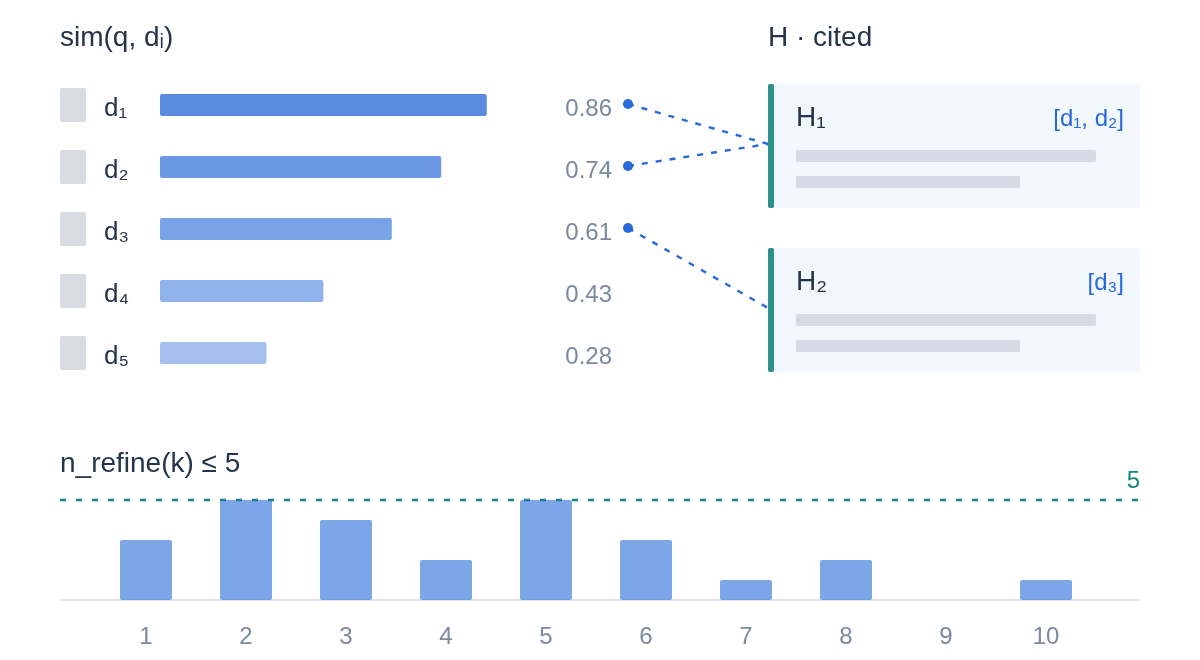
When a review sends a strategy back for another iteration, the Library Refiner reads the library pages and figures relevant to it and proposes at most five concrete refinements, such as an entry filter, a stop or a sizing rule. Each one cites the document and page it came from, and the Strategy Developer reads them on the next iteration. The strategy's owner can also request a refinement from the strategy page at any time.
New ideas from the whole corpus
Every request for new hypotheses also gives the Research Lead a rotating handful of documents from the external collections, each with its source address, so new ideas draw on the whole corpus rather than only on what the model already knows. Refinements and their citations are listed on the strategy page, and a citation opens the cited page in the library.
What you can do in the library.
Each action is available from the Library page in your workspace once you are signed in.
Scroll horizontally to see all columns.
Library actions and what to expect
Action
What happens
Good to know
Search
Ranked passages with your term highlighted and up to three figures from the matching page.
Short terms match best; try another language when a search finds nothing.
Read
One page at a time, with its figures and a link to the original source.
Where a source is kept for research but not republished, you see an excerpt and a link to the full text at the source.
Send to Strategy Factory
The Research Lead turns the document into hypotheses that run through the full pipeline in your workspace.
It counts toward your daily allowance, like any idea you submit, and needs credits.
Refine from the library
The Library Refiner proposes at most five cited refinements for one of your strategies.
It also runs by itself whenever a review sends the strategy back for another iteration.
Anyone signed in to a Stratmill account, including the free plan, can search and read it. Sending a document to the pipeline uses your daily allowance and credits, like any idea you submit.
Does Stratmill copy code from the library into my strategy?
No. Code blocks are removed before a document reaches the Research Lead, which describes the mechanism in its own words. The Strategy Developer then writes its own implementation for Stratmill's venues, and the strategy page credits the document as its source.
Can I read every document in full?
Not always. Some sources are kept for research but not republished; for those the reader shows an excerpt and links to the full text at its source.
Does a cited refinement mean the strategy will improve?
No. A refinement is a documented proposal. The changed strategy is verified, backtested with real fees and reviewed again, and its results can get worse.
Where do I see the refinements for my strategy?
On the strategy page, under Library refinements. Each refinement shows its citations, and the owner of the strategy can request a new refinement there.
Put the library to work.
Search the corpus, send a document into the pipeline and follow the cited refinements on your strategy pages.
Stratmill is an AI trading strategy platform, not financial advice or a broker. Backtest and paper results are hypothetical. Trading involves risk of loss.